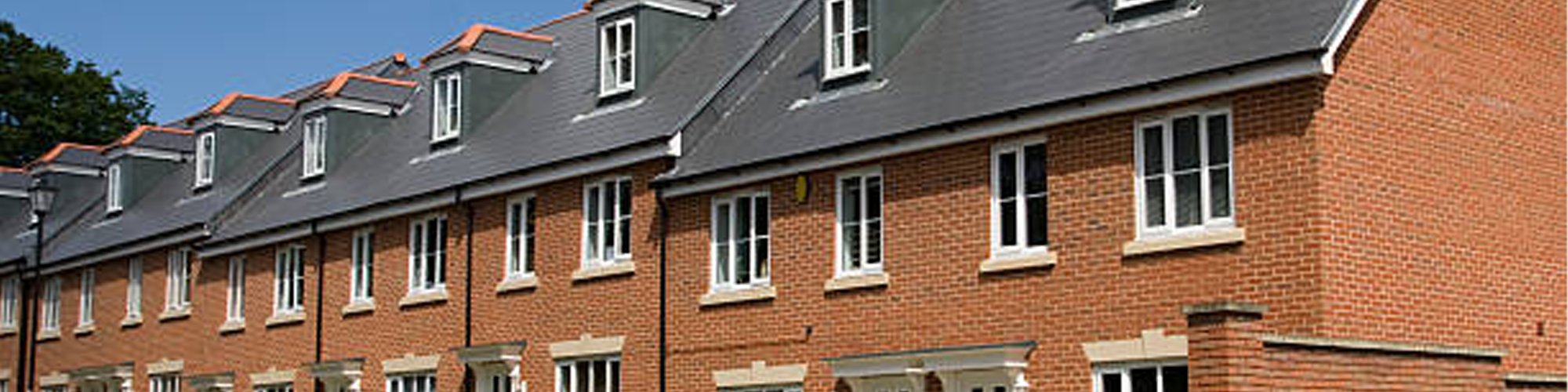
Affordable Housing – Taking Responsibility

In 1980 the government of the day determined to make amendments to the housing act, these amendments are known as The Housing Act 1980. Essentially the new act, which was applicable in England and Wales and ran through to the 1990’s, afforded council tenants the right to buy their council owned property. The council would simply value the property and then apply a discount to the property, the discount itself was based upon a sliding scale and the amount of the discount was determined largely on how long the applicant had been a council tenant. The scheme itself proved to be a resounding success and resulted in considerably increased home ownership but at the same time the scheme caused a severe decline in not only the number of council owned homes which would, until the new act came into force, provide a revolving stock of housing to local authorities, but it also ushered in a new era in which local authorities effectively stopped investing in council house construction. The upshot was that many local authorities then began a process of wholesale disposal of their housing stock, much of which was sold to Housing Associations or Investment Enterprises keen to acquire substantial numbers of tenanted properties at what now appears to have been at significantly below market values. The Housing Associations and Investment Enterprises have subsequently been able to revalue their housing stock at contemporary pricing which in turn has ensured that those organisations have very strong asset based balance sheets. In the final analysis, although many former council tenants obtained a significant financial windfall in the form of the discount applied to their homes, there are simply far less council owned homes available to a growing population desperately in need of a safe and affordable place in which to live and thrive.
WHAT IS AFFORDABLE HOUSING?
Government policy has evolved since the 1980 housing act and housing which was once termed as “Council Housing ” or “Social Housing” has been replaced with a new category of housing known as “Affordable Housing”. The term “Affordable housing” includes homes which are available for sale or for rent and are for people whose needs are not met by the housing private market. Affordable housing is a key element of the government’s plan to end the housing crisis, to tackle homelessness and also to provide aspiring potential homeowners with a first step onto the housing ladder. The Government’s National Planning Policy Framework (NPPF) defines the types of affordable housing overall as broadly Affordable Housing for Rent and Affordable Housing for Sale. Affordable housing for rent – AFFORDABLE HOUSING FOR RENT – such homes are let at least 20% below local market rents (known as affordable rental properties) or they are let at rates set between market rents and social rents (known as intermediate rental properties). The market rent or market value refers to the cost of housing either for rent or for sale in the private sector in a specific area. Calculating market costs takes into account the property size, type and its location, the latter having a profound effect on value with significant variations across the UK. SOCIAL RENT – This is set through the National Rent Regime in England at around 50% of market rental values, Social Rent homes are for people on very low incomes. The majority of affordable housing is owned and managed by registered providers (known as RP’s or Housing Associations) who receive funding from Homes England or the Greater London Authority, funding provided by the national government. There are three main types of RPs: not- for-profit RPs (known as Housing Associations), for- profit RPs (known as Private Sector Landlords) and some local authorities. The activities of all RPs are overseen by the Regulator of Social Housing. Affordable housing may also be targeted to address a specific need, such as specialist housing for vulnerable, older or disabled people and these are known as “supported housing” homes. AFFORDABLE HOUSING FOR SALE – These are homes provided with other affordable routes to home ownership. This can include shared ownership whereby homes are sold at a discounted rate (of at least 20% below market value) and homes referred to as being “Rent to Buy”. BELOW MARKET VALUE HOUSING – Finally, there can be homes committed to by developers which are to be sold at a discount at local market value. Developers can be asked to commit to selling some homes at least 20% below local market value as part of the grant of planning permission for development
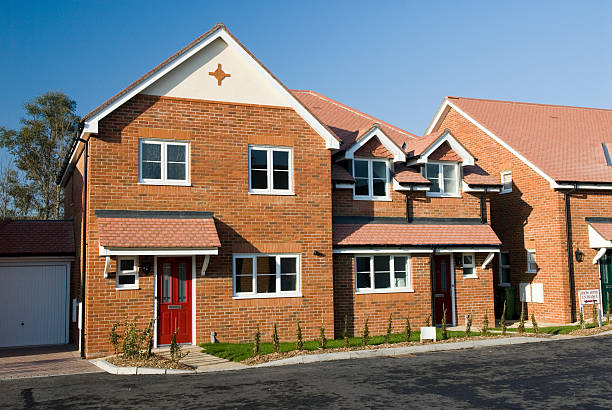
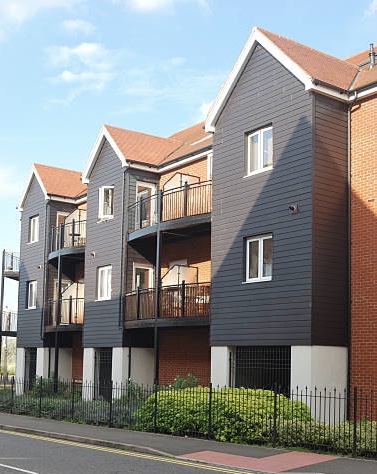
SUCCESS PROPERTY MAKE AFFORDABLE HOUSING HAPPEN!
Each local authority across the UK is responsible for setting their own minimum affordable housing percentages which are required for each residential development to which they consent. Setting a minimum required percentage of affordable housing for all residential development within any particular local authority area should mean that developers cannot deviate from delivery of the required affordable housing percentage. Unfortunately a raft of factors are taken into account in relation to each individual residential development planning application (such as the provision of other community benefits, also but rarely a lack of demonstrated need for affordable housing, the provision of other community assets or benefits for example a GP surgery, educational facilities or local infrastructure projects/contributions) and therefore in reality almost without exception each local authority finds itself in a position wherein the required percentage of affordable housing pertinent to the area is not delivered. In some local authority areas the delivery of affordable housing is woefully inadequate and in extreme cases the government will appoint the Planning Inspectorate and place a local authority into what is known as “Special measures”. This is a process where the Planning Inspectorate influences and can even determine the outcome of planning applications, set minimum affordable home delivery targets and require a local authority to alter its planning policies. At Success Property we pride ourselves on targeting exactly the right type of potential development land, often this is redundant commercial/industrial land, contaminated land or land requiring some form of remediation before it can be developed. We often acquire brownfield, previously developed or contaminated land located within the Greenbelt, that can also positively influence the delivery of affordable housing. Our approach has been extraordinarily successful at not only ensuring that Success Property’s involvement in a development meets the required affordable housing percentage, but in many cases the percentage is significantly exceeded, we choose the right developer partners and ensure that they are able to deliver affordable housing as an absolute priority.
AS A SOCIETY WE MUST ALL ACT POSITIVELY
In terms of the delivery of social housing which is obviously the cheapest type of accommodation available in our society, this will require the government and local authorities to embark upon a radical change in direction of housing policy. There are many who say that “Affordable Housing” simply isn’t affordable and to some seeking a home that’s of course correct. Our focus is to ensure the maximum delivery of the various tenures of affordable housing as designated under current government policy. There are those who will argue that affordable housing is not a priority but we disagree with that, in our view any nitiave which results in the delivery of housing which is ultimately more affordable or less expensive is a cause worth fighting for. We have made it our mission to do everything we can to support communities by working towards the delivery of affordable housing. We believe that the overall societal benefits, the educational opportunities, the health benefits and the positive impact it can have on so many people’s lives, that affordable housing delivery should be a priority issue for land owners, developers, local authorities, community groups, stakeholders and all other members of our society. Please do join us in our mission.